Flagship phones are no longer just about a few megahertz more speed or a little less screen bezel. The year 2025 is a full-fledged AI battlefield. We’re no longer dealing with smartphones that have AI capabilities; these are AI devices that also happen to be phones. This isn’t just a simple upgrade, it’s a revolution!
This year, we have three main fronts to fight on:
- The AI revolution: Having generative AI on your phone is no longer an option, it’s a ticket to the game. Processors are now built around an AI mastermind (NPU) to process everything on the phone, fast and secure. From live translation of conversations to editing photos with simple text commands, everything is changing.
- The renaissance of foldable phones: Foldable phones are no longer the expensive, fragile toys they once were. They’ve matured and become major competitors. Designs have become incredibly slimmer, lighter, and more durable, and large, functional external displays have changed the entire user experience.
- The Cold War of Cameras: The megapixel race is over. The new war is over sensor size and computational photography. The new trend is quality over quantity, meaning companies are ditching the useless 2-megapixel lenses and replacing them with giant main sensors (like 1-inch sensors) and 200-megapixel telephoto lenses combined with AI to take photos that rival professional cameras.
1-Apple iPhone 17 Pro Max; The Return of the King

It’s not just an upgrade; it’s a statement! The iPhone 17 Pro Max is Apple’s definitive answer to all the innovation in the Android world. It’s a great phone for tech nerds, content creators, and any iPhone user who felt the last few generations had become repetitive. The titanium frame has been replaced by a new aluminum frame, and the camera module now covers the entire width of the top of the phone like a plateau, giving it a bold and modern look. It may be a little heavier than the previous generation, but that heaviness feels powerful. The star of this phone is the A19 Pro processor, which is up to 40 percent more efficient. But more importantly, for the first time in iPhone history, Apple has used a vapor chamber cooling system. This means a serious focus on stable performance for heavy gaming and AI processing on the device itself. The cameras are a real revolution! All three rear lenses are now 48 megapixels. The new telephoto lens, with a new generation tetraprism design and larger sensor, enables 4x true optical zoom and 8x optical quality zoom, the longest zoom in iPhone history. The selfie camera has also been upgraded to an 18 megapixel Center Stage sensor, which is great for group selfies. With iOS 26, Apple’s AI has finally matured, with features like live conversation translation, Dual Capture (simultaneous recording with the front and rear cameras), and the new Liquid Glass interface making the experience of using the phone smarter and smoother than ever.
2-Samsung S25 Ultra: The Swiss Army Knife of the mobile world!

This phone is the best choice for professional users who want the best of everything in one package at a reasonable price. It can be said that for photographers who need zoom, for designers who work with the S Pen, and for anyone who wants the most complete Android experience, this phone should be followed. Its beating heart is the proprietary Snapdragon 8 Elite for Galaxy processor, which is optimized for Samsung’s Galaxy devices. A giant and bright 6.9-inch display, the S Pen that has become the hallmark of this series, and the Samsung DeX feature for the desktop experience make this phone an unparalleled tool.
It has attractive and functional cameras; A 200MP main sensor, a new and excellent 50MP ultrawide lens (a big jump from the previous generation’s 12MP), a 10MP telephoto with 3x zoom, and a 50MP periscope telephoto with 5x zoom. This quadruple combination gives you unparalleled flexibility from wide-angle photography to 100x spatial zoom, now even better with AI. Samsung’s artificial intelligence (Galaxy AI) is also quite mature and practical. Features like live conversation translation, note summarization with Note Assist, and advanced photo editing tools are deeply integrated into the operating system and really make things work for professional users.(The Best Samsung Phone in Every Price Range (October 2025))
3-Samsung Galaxy Z Fold 7; A foldable office in your pocket

Finally, the foldable phone is what it should be. With the Z Fold7, Samsung has created a device that is shockingly thin and light, without compromising on its power and features. This expensive foldable phone is made for professionals and those who are constantly multitasking. The main selling point of this phone is its new design. At just 4.2 mm thick when unfolded and weighing 216 grams, it is almost the same size as a regular flagship, which means it can finally be considered an everyday phone. This solves the biggest problem of previous generations of Folds, which was their heaviness and bulk.
The phone has two displays; a 6.5-inch outer display for quick tasks and a giant 8-inch inner display that turns the phone into a real tablet for multitasking. Unlike some foldables that skimp on hardware, the Fold 7 is a true flagship. The Snapdragon 8 Elite processor, 16GB of RAM, and for the first time, a flagship camera system with a 200MP main sensor like the S25 Ultra, make this a beast of a phone.
4-Samsung Galaxy Z Flip7

The Flip is no longer just a pretty phone; it’s a compact, great phone. The biggest upgrade this year is that it’s more functional. The biggest and most important change is the new 4.1-inch external display. This large display transforms the phone from a device you had to open for everything to a phone where you can reply to messages, check notifications, and use widgets without opening it.
The phone’s design is slimmer (6.5mm when open) and it has a larger 4,300mAh battery, which solves two of the main problems of previous generations: thickness and battery life. In terms of hardware, it’s no slouch either. Although it is found in Iran with the Exynos 2500 processor, it has enough power to do various tasks with 12 GB of RAM. The cameras also perform very well with a 50-megapixel main sensor and a 12-megapixel ultrawide, although they have not been upgraded compared to the previous generation.
5-Google Pixel 10 Pro XL; The smartest phone in the world!
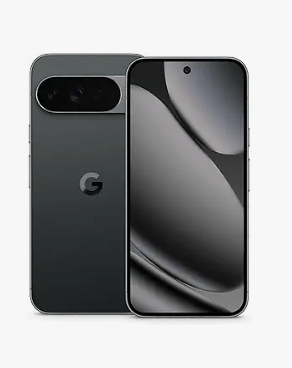
Google’s philosophy is simple; hardware serves software. Rather than seeking to break records in benchmarks, the Pixel 10 Pro XL wants to be the smartest, most useful, and most functional phone you can buy. For a user who prefers smart software to clunky hardware, this phone can be an attractive flagship option. For those who want their phone to be like a personal assistant and have the best point-and-go photography experience, it can also be an attractive option. This phone is built from the ground up for artificial intelligence. The new Tensor G5 processor is designed specifically to run Gemini AI models on the device itself. This enables great features like Magic Cue (which automatically shows you relevant information during calls) and Camera Coach (which guides you to take better photos).
While it doesn’t have the S25 Ultra’s spatial zoom, its camera system (50 wide, 48 ultra-wide, and 5x telephoto with a 48MP sensor) takes great photos with Google’s computational photography magic. Features like Add Me and Auto Best Take use AI to effortlessly capture the best shots for you. The phone runs the purest version of Android 16 and gets 7 years of software updates, making it a long-term, secure investment. Its display is also one of the brightest on the market, with a maximum brightness of 3,300 nits.
6-Xiaomi 15 Ultra; Photography Monster!
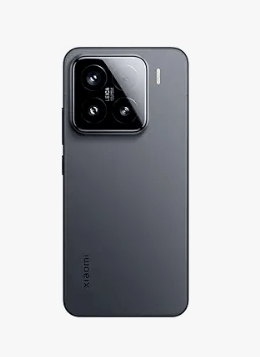
This isn’t a phone with a good camera; This is a professional Leica camera that also happens to ring a bell! With this phone, Xiaomi has created the most powerful and versatile mobile photography tool. This Xiaomi flagship is for those who understand concepts like focal length and bokeh and seek maximum creative control. Its camera hardware is breathtaking. It has a giant 1-inch 50-megapixel main sensor that captures incredible light and creates an incredibly natural bokeh. Alongside it is a 50-megapixel ultrawide lens, a 50-megapixel 3x telephoto and a 200-megapixel periscope lens with 4.3x zoom. The combination offers unrivaled image quality at all focal lengths.
It is a true flagship in terms of performance too. With a Snapdragon 8 Elite processor, a beautiful design with a vegetable leather frame and a great battery that lasts up to two days, it is a complete package. It also has 90W wired and 80W wireless fast charging, which leaves nothing to be desired.(Xiaomi 15T Pro review)
OnePlus 13; Flagship Killer, Luxury Edition

OnePlus is back to its roots, but with a luxury twist! The OnePlus 13 offers flagship-level performance at a lower price than its big rivals, making it the best value buy in the world of ultra-premium phones. This flagship killer is the perfect choice for gamers who want the highest frame rates, power users who hate waiting for their phones to charge, and anyone who wants 95% of the experience of a $1,300 phone for a few hundred dollars less, if not the best. This phone is built for speed. It uses the standard Snapdragon 8 Elite chip and scores higher in benchmarks than its competitors from Samsung and Google. With up to 24GB of RAM, it’s the fastest Android phone on the market.
The phone’s 6.82-inch QHD+ display is brighter than any of its competitors, with a peak brightness of 4,500 nits. Its massive 6,000 mAh battery, with its insane 100W wired and 50W wireless charging, beats Apple and Samsung. The 50MP triple camera system (wide, ultrawide, 3x telephoto) developed in collaboration with Hasselblad takes great photos with accurate colors, although it can’t compete with the S25 Ultra or Xiaomi 15 in zoom.(OnePlus: From “Flagship Killer” to Oppo’s Sibling)
What’s the formula for a flagship phone in 2025?
So, let’s see what a flagship phone in 2025 should have to survive in this breathtaking competition.
- The brain (processor): It’s not just the clock speed that matters anymore. The key piece is the neural processing unit (NPU), or the brain of the AI. A powerful NPU is essential for running generative AI models quickly and efficiently on the phone itself. At least 12-16 GB of RAM and 256 GB of UFS 4.0 storage are also required.
- Eyes (camera): The new standard is smarter, not more. This means opting for a large main sensor (a 1-inch sensor at the bottom of the line) rather than adding a poor-quality macro lens. A periscope telephoto lens with at least 5x optical zoom is also a must. But the real magic is computational photography, where the NPU and sensors work together to optimize photos in real time.
- Face (display): A flagship display should have an LTPO panel with a refresh rate of 120 Hz or higher, with the ability to lower the refresh rate to 1 Hz to save battery life. The maximum brightness should be high enough to be easily visible in direct sunlight; 2,500 nits is the new standard, and some are going as high as 4,000 nits.
- Breath (battery and charging): A full day of battery life is the minimum expectation. 5,000 mAh is the standard for regular phones, and foldables are getting close. Charging speed is also crucial; wired charging under 100 watts is already considered slow, and wireless charging should be at least 50 watts.
- Body (build quality): Using premium materials like titanium or advanced aluminum frames and the latest generation of Gorilla Glass is a must. IP68 certification for water and dust resistance is also a must. Innovative designs like ultra-thin foldables are now part of the definition of a flagship.
- Soul (AI): This is the most important part of the story. A 2025 flagship is incomplete without a truly integrated and functional AI suite (like Galaxy AI or Gemini). AI is no longer a feature; it is the foundation of the user experience.