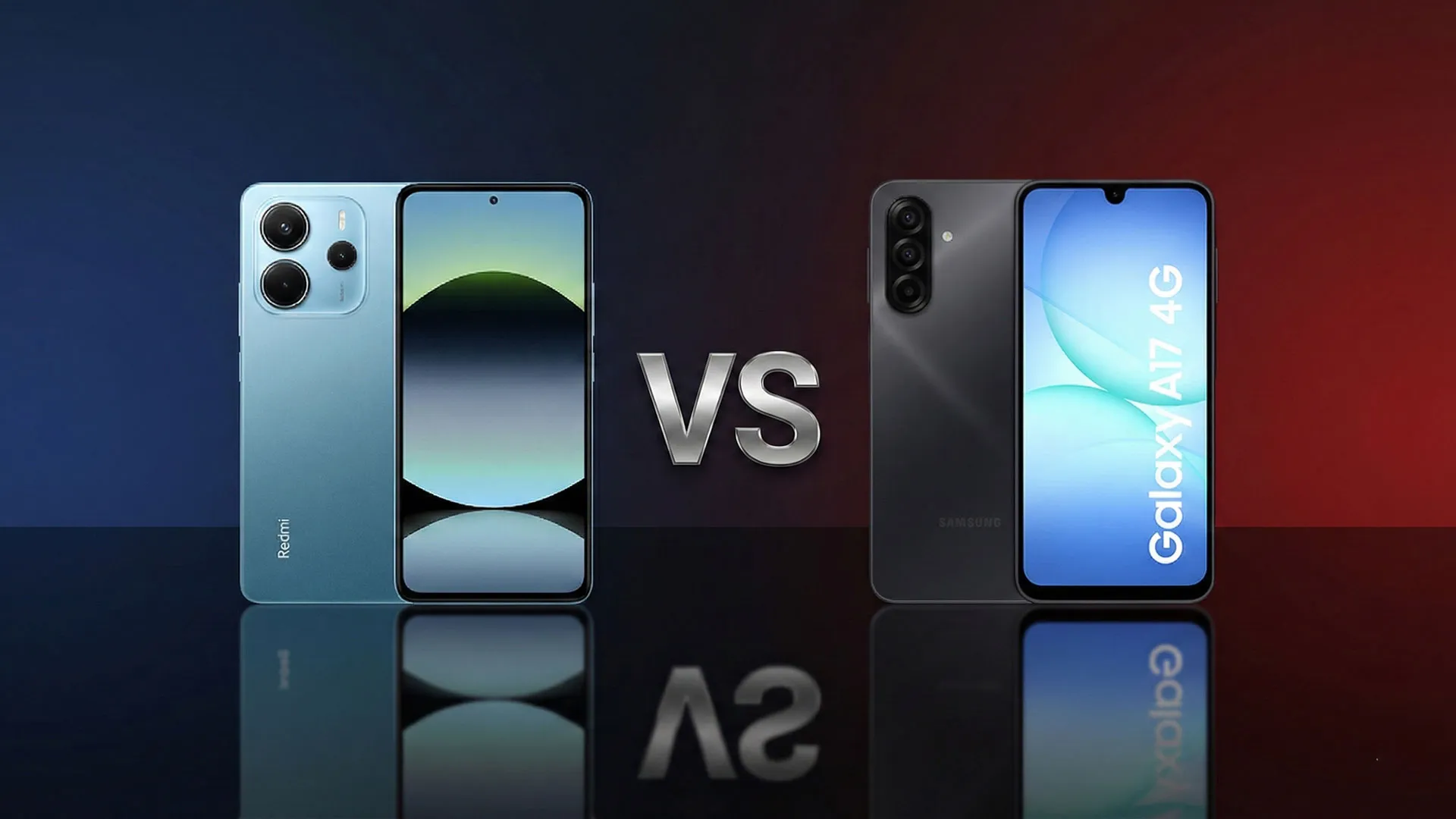
Today we are going to compare two of the most popular and best-selling phones on the market. We are going to talk about two of the market’s economic giants: Samsung A17 4G and Xiaomi Redmi Note 14 4G.
The story of Samsung and Xiaomi in the market has become like the story of football teams. Each has its own passionate fans and every year they send a new representative to win the hearts of users. This year, the matter has become much more serious. Why? Because our purchasing power requires that when we are spending money, we choose the best possible option. The era of trial and error is over and we need to know exactly what we are spending our hard-earned money on.
I am not going to just give you a series of numbers and figures that are also on the sites. We want to see what these numbers mean in real life, in my hands and yours. So join us to see which of these two phones is worth buying more in this breathtaking battle and which one can claim the title of economic king.
Design comparison of Samsung A17 vs Xiaomi Redmi Note 14 4G
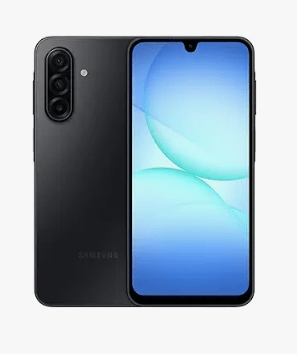
Well, let’s take the phones in our hands. What is the first thing we feel? The body material, weight and appearance. Samsung has not made a winning combination this year either. The A17 has exactly the same design language that we saw in the S25 and S24. The back panel is completely flat and the cameras without any islands or extra frames, like three separate eyes sticking out of the body. This design is very clean and stylish and makes the phone look more expensive than its price.
- Body material: Samsung has used plastic, both for the frame and the back panel. But wait! We have plastic rather than plastic. Samsung usually uses high-quality plastics that don’t feel bad, but they attract fingerprints like a magnet (especially dark colors).
- Protection: This is where Samsung plays a trump card. On the screen, Gorilla Glass Victus+ is used. This glass was previously only on flagships! This glass is really resistant to scratches and falls. This means that if you drop the phone, the screen is much more likely to remain intact.
- Ergonomics: With dimensions of 164.4 x 77.9 x 7.5 mm, the phone is relatively thin. It also weighs 190 grams, which is reasonable for a phone of this size. But there is one thing; the edges of Samsung phones have recently become a bit flatter, which may be a bit annoying for small hands during prolonged use, but it feels sturdy.
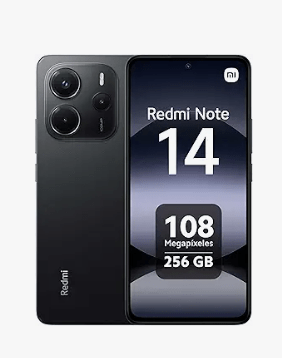
Xiaomi, however, has gone the other way. In the Redmi Note 14, the camera module has a square shape with rounded corners that fits nicely on the left side of the back cover. This design makes it possible to shout from a distance of 10 meters that I have a new Redmi Note!
- Body material: Here we are also dealing with plastic. The frame is metal, but it is not pure aluminum and is combined with pressed plastic. The back panel is also plastic.
- Protection: Gorilla Glass 5 is used on the screen. Gorilla Glass 5 is still good glass and does its job properly, but compared to Samsung’s Victus Plus, it is like comparing Pride to Cerato! Victus Plus is a few generations ahead.
- Ergonomics: The Redmi Note 14 is a bit thicker (8.2 mm thick) and weighs about 196.5 grams. This extra weight is probably due to the larger battery, which we will get to later. But Xiaomi did a good job with the curves of the edges of the back panel and the phone fits well in the hand.
Water and dust resistance
Both phones are IP54 certified. What does this mean? It means that if it rains or gets a little splashed on the phone, there will be no problem. But be careful, don’t take the phone to the pool or drop it in a pitcher of water! This certification does not mean complete waterproofness. It is only water-resistant. In this area, both are equal, but Samsung gives a sense of physical security with its Victus Plus glass.
If you are looking for a phone with a stylish, modern and simple look, the Samsung A17 is your choice. If you like bold and special designs and don’t mind a little more weight, the Redmi Note 14 can attract you.
Comparison of Samsung A17 and Xiaomi Redmi Note 14 4G screens
The screen is what we look at 99% of the time. So it’s very important that its quality is good. Here it’s a fight between image quality and image smoothness. Samsung has used a Super AMOLED panel on the A17. As you know, Samsung is a master of making display panels. The black color in this panel has infinite depth (because the pixels are turned off) and the colors are vivid and attractive. The pixel density of about 390 pixels per inch also makes the images very sharp and clean.
The screen brightness reaches 800 nits (HBM). This number is great for use at home and in indoor environments, but under direct sunlight, you may have to make a little shadow with your hand to see the content. But where is the weak point? 90 Hz refresh rate. Samsung! It’s 2025! Why still 90 Hz? Now 120 Hz is the standard. Of course, 90Hz is much better than 60Hz and you feel the clarity, but when your competitor offers 120Hz, it is considered a shortcoming. That teardrop (U-shaped) notch at the top of the screen is also a bit outdated and feels like a phone from a few years ago.
Xiaomi has made a splash here. The Redmi Note 14 has an AMOLED panel that offers a refresh rate of 120Hz. This means that when you are scrolling through menus or scrolling up and down Instagram, everything looks like butter. The difference between 90 and 120 may not be too noticeable for the average user, but gamers and sharp eyes will definitely notice it.
In addition, the brightness of this panel reaches up to 1200 nits (HBM) and even 1800 nits (peak). This means that you can comfortably use your phone even under the midday sun. The screen bezels are also smaller than those of Samsung’s competitor, giving you a more immersive feeling. The selfie camera design is also punch-hole (a tiny hole), which is much more modern than Samsung’s teardrop notch.
Xiaomi is the undisputed winner here. 120 Hz, higher brightness, and a more modern look (punch-hole) tip the scales in favor of Redmi. Samsung only has the advantage if you are very sensitive to Super AMOLED and color saturation, otherwise it is technically behind.
Comparison of battery performance of Samsung A17 and Redmi Note 14 4G
The two companies’ strategies are completely different in this area.
- Samsung: 5000 mAh battery. It is standard and easily lasts a full day. One UI’s power management is also good.
And Xiaomi: 5500 mAh battery. This extra 500 really makes an impact. Given the low-power processor, Redmi Note 14 can last a few hours longer than Samsung in heavy use. If you work with the phone a lot, this feels perfect.
Charging speed and what’s in the box - Samsung: Supports 25W charging. But there’s no charger in the box! Just put a Type-C dual-ended cable. Xiaomi: Supports 33W charging and the charger is in the box.
Xiaomi is the absolute winner. It has a bigger battery, charges faster, and you don’t have to pay extra for a charger. Samsung is really underselling here.
Samsung A17 vs Xiaomi Redmi Note 14 4G Camera Comparison
Let’s get to one of the most important parts: the camera! Your Instagram profile and story photos should be of high quality.
Samsung has a triple camera setup:
- Main: 50MP with optical image stabilization (OIS).
- Ultrawide: 5MP.
- Macro: 2MP.
The golden point here: OIS. Optical image stabilization means that the camera lens physically moves to neutralize the shake of your hand. This keeps night photos (where the shutter needs to stay open longer) from blurring and the videos you take less shaky. Samsung’s color processing is also famous; the photos are colorful, glossy, and ready to share. The presence of an ultra-wide camera (even though it’s 5 megapixels and its quality isn’t great) is very useful. For example, when you want to take a picture of a large landscape or a group of friends and you can’t fit in, the ultra-wide will save you.
Xiaomi also has a triple camera, but with a shocking change: - Main: 108 megapixels (without OIS).
- Macro: 2 megapixels.
- Depth detection: 2 megapixels.
Yes, you read that right! There’s no ultra-wide camera! Xiaomi has removed the ultra-wide camera in this generation, which is really a shame. Instead, it says, “I put a 108 megapixel sensor that you can zoom in on (In-sensor zoom) and get good quality.” True, the main camera’s detail is very good during the day and 108MP allows you to have a good 3x zoom, but the ultra-wide does not fill the void.
The lack of OIS also means that at night the photos are more noisy and the video recording is shaky. Xiaomi’s 20MP selfie is better on paper than Samsung’s 13MP and usually does a good job in face retouching (beauty mode), which some might like.
Samsung wins here. Why? Because it has a more complete package. Having OIS is very important for night photography and video recording, and having an ultra-wide camera opens up your hands. Xiaomi’s 108MP number is more of a promotional figure when it doesn’t have image stabilization and has also removed the wide lens.
Hardware Comparison of Samsung A17 and Xiaomi Redmi Note 14 4G
Let’s go to the engine room of the phones. Where all the processing is done. You may not believe it, but here we are with a strange similarity.
Both phones use chipsets from MediaTek.
- Samsung A17: Uses Helio G99. This chipset is a 6-nanometer processor that has passed its test. It has two powerful Cortex-A76 cores and six low-power Cortex-A55 cores. It is great for everyday tasks, its battery consumption is low and it does not heat up.
- Xiaomi Redmi Note 14: Uses Helio G99 Ultra. Now what does this Ultra mean? To be honest, it is not much different from the regular version! A series of minor software optimizations have been made to support more powerful cameras and better image processing. In terms of raw power (running games and apps), there is almost no difference.
RAM and storage: Where Samsung is stingy
Here is the main difference. - Samsung: Unfortunately, Samsung is still stingy in the basic versions. The basic version of the A17 comes with 4 GB of RAM and 128 GB of storage. 4 GB of RAM is really not enough for Android 15 and One UI 7! It may be good at first, but after a few months of installing apps, you will feel lag and slowness. There are also 6 and 8 GB versions, which are more expensive.
- Xiaomi: Handy and generous! The Redmi Note 14 is usually found in the market with 8 GB of RAM and 256 GB of storage as the standard version (or at least the base version has 6 GB). This more RAM means you can open 10 apps at the same time and keep the phone running. With 256 GB of storage, you no longer have to worry about filling up with photos and videos.
To be honest, neither of these phones are gaming phones. But with both of them you can play Call of Duty Mobile on Medium graphics settings and High frame rate. Lighter games like Subway Surfers or anything else run smoothly. But for heavy games like Genshin Impact, you should set the graphics to the lowest setting.
In games, the Xiaomi feels better because of the 120Hz display and better touch sampling rate (touch response speed). Also, the Xiaomi cooling system usually works a little better in this series and heats up later.
In terms of processor, they are equal. But in terms of RAM and storage, the Xiaomi is ahead by a long way. Buying a phone with 4GB of RAM in 2025 is a mistake, so if you buy a Samsung, be sure to buy the 6 or 8GB RAM version, which will cost more. Xiaomi gives you the full package right from the start. - Mobile with the most powerful hardware and an incredible price (Poco F7)
Samsung A17 vs Xiaomi Redmi Note 14 4G UI Comparison
This is where Samsung punches its rivals in the face! The Galaxy A17 4G comes with Android 15 and One UI 7. Samsung has promised to provide OS and security updates for this phone for up to 6 years. What does this mean? You will see Android 21 on this phone! This is incredible for a budget phone.
The One UI has reached full maturity. Everything is in its place, bugs are rare, and the software and hardware are in perfect harmony. Features like Samsung Knox also ensure the security of your data. You won’t see any annoying ads in the menus.
The Redmi Note 14 comes with Android 14 and the HyperOS interface. HyperOS is much better than MIUI; it is lighter, has nicer animations, and has a lot of customization options (like cool lock screens).
But… Xiaomi usually releases a maximum of 2 or 3 Android updates for the Redmi Note series. That means you might see Android 16 or 17 at the latest. In addition, there are still ads in some of Xiaomi’s default apps (like File Manager or Music Player) which are really annoying.
If you want to keep your phone for 5 years and be comfortable with security and new features, Samsung is definitely the winner. 6 years of updates is a huge advantage. Xiaomi is good for those who want variety and change their phones every 2 years.
Comparison of Samsung A17 Speakers with Xiaomi Redmi Note 14 4G
- Speakers: Xiaomi has stereo speakers (sound comes from both the bottom and the top). This is great for watching movies and playing games. Samsung unfortunately still has a mono (single-channel) speaker that only comes from the bottom and if you touch it, the sound is muffled.
- 3.5mm jack: Fortunately, both phones have a hands-free jack.
Should we buy Redmi Note 14 or Samsung A17?
Let’s get to the point. What are the prices like in the market now (January 2026)?
To see which phone is your priority:
Go for the Samsung Galaxy A17 4G if:
- You’re a person who will buy and use it for a few years: 6-year update and high build quality (Victus+ glass) means this phone will never die.
- Photography and videography are important to you: OIS stabilization and an ultra-wide camera are something that Xiaomi doesn’t have.
- Branding and easy sales: Samsung phones are always easier to sell and sell less with a price drop.
- Hassle-free software: You don’t mind bugs and ads and want a clean environment.
Go for the Xiaomi Redmi Note 14 4G if: - Your budget is limited but you want a lot of options: You don’t want to pay extra for a charger and you want to get more RAM and storage for the same money.
- You are a movie and gamer: The bright 120Hz display, a larger 5500mAh battery, and stereo speakers provide a better multimedia experience.
- You want a modern design: You care about a smaller screen and a more modern look.
- Charging speed: You don’t want to wait long for your phone to charge.
I hope this detailed article has helped you make the best choice. Remember that your phone is a tool, it’s how you use it that matters. If you have a question, don’t keep it in your mind, ask!
Nintendo Switch 2: The new king of handheld consoles or just an expensive upgrade?