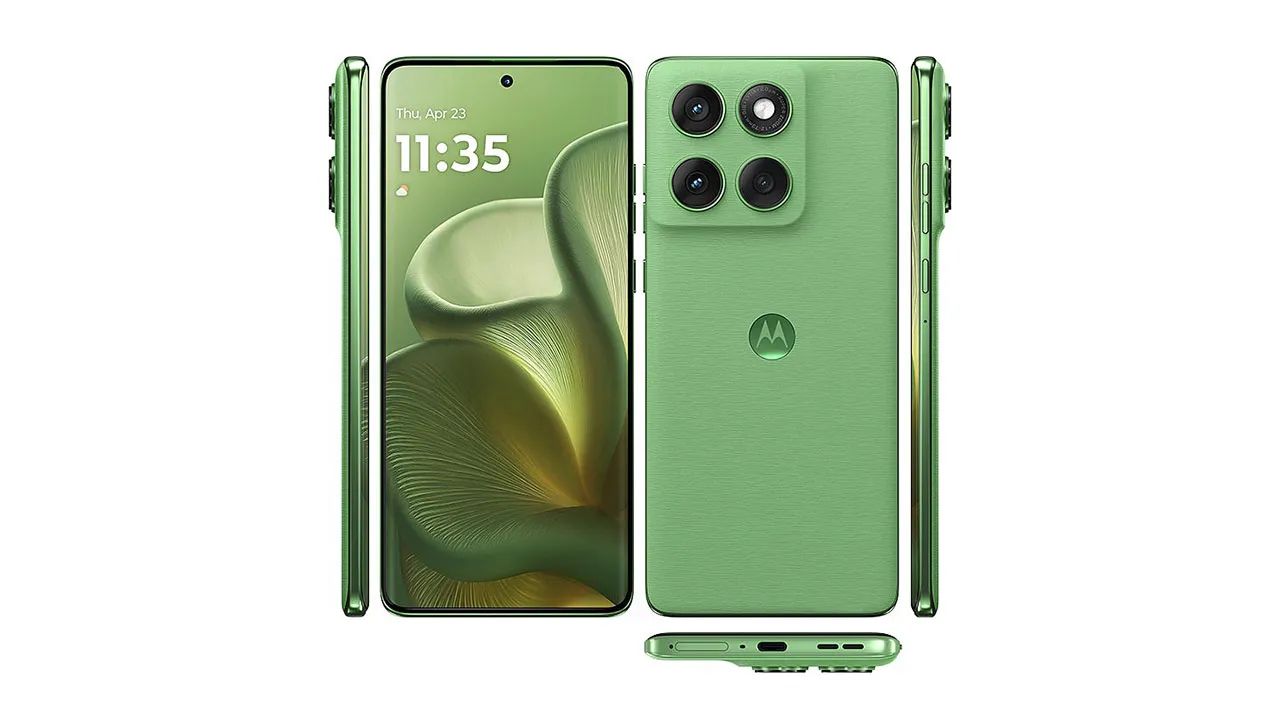
Today we come to a phone with which Motorola wants to show itself in the middle of the crowded mid-range market. The Motorola Edge 60! This phone has big claims; a versatile camera, a stunning display, and a charming design. Motorola has always been known for its clean software and stylish designs, but it has often been overshadowed by the hardware power of competitors like Xiaomi or the dominance of the Samsung brand. Now the Edge 60 is the company’s attempt to offer a perfectly balanced package. But is it as good in practice? Or is it just a series of numbers and figures on paper? Let’s check it out together and see how many dead people it is! This phone has a few trump cards on paper, which we are going to talk about in detail; A true telephoto lens that is less common at this price, a P-OLED display with a staggering 4500 nits of brightness, super-fast UFS 4.0 internal storage and the return of the memory card slot, and a massive 5200 mAh battery that promises excellent charging.
Motorola Edge 60 Design Review
| Category | Key Points |
|---|---|
| Design & Build | 7.9mm thin, 180g light • Plastic frame & back • Vegan leather options • Curved display |
| Material Strategy | Plastic instead of aluminum • Cost-saving for internal upgrades • UFS 4.0 storage • SD card slot |
| Durability | IP68/IP69 certified • MIL-STD-810H • Waterproof (1.5m/30min) • High-pressure water resistant |
| Competitive Advantage | Superior durability vs Samsung Galaxy A56 (IP67 only) • Best in price range |
Key Feature Comparison
Motorola has always been good at design, and the Edge 60 is no exception. At about 7.9 mm thick and weighing about 180 grams, the phone is considered a relatively thin and light device and fits very well in the hand. Motorola has used a plastic frame and back cover for this phone, which may not give the luxurious feel of the aluminum frame of the previous generation, the Edge 50 Pro, but the versions that come with vegetable leather and special Pantone colors give the phone a stylish and attractive look and also prevent it from slipping.
Here’s a smart twist in Motorola’s strategy. Going with a plastic frame instead of aluminum might seem like a step backwards at first glance. But it seems like a conscious decision to manage costs. The savings have been put towards much more significant internal upgrades; the jump from UFS 2.2 storage in the previous generation to the super-fast UFS 4.0 storage and the reintroduction of a memory card slot. In effect, Motorola has sacrificed a bit of the luxury feel of the exterior in order to give the user more tangible speed and performance; a smart move for a practical mid-range phone.
The curved display, which has become the signature of the Edge series, is also present here. These curves make the phone more comfortable to hold and look expensive, but as you know, they have their detractors and sometimes cause accidental touches on the edge of the screen.
But the Edge 60’s main selling point in this department is its body’s durability. The phone has received IP68/IP69 and military standard MIL-STD-810H certifications. In simple terms, this means that it can not only survive being submerged in 1.5 meters of water for up to 30 minutes (IP68), but also withstand the pressure of high-pressure water jets like a car wash (IP69)! The military standard also means that it is highly resistant to drops, thermal shock, and harsh environmental conditions. This level of resistance makes the Edge 60 one of the toughest phones in this price range and is a big advantage over competitors like the Samsung Galaxy A56, which only has an IP67 certification.
Motorola Edge 60 Display Review
Display Features & Market Strategy Analysis
Display Specifications
| Feature | Specification |
|---|---|
| Display Type | 6.67-inch P-OLED |
| Resolution | 1.5K (higher than standard FHD+) |
| Refresh Rate | 120 Hz |
| Peak Brightness | 4500 nits (for HDR content) |
| Protection | Gorilla Glass 7i |
Key Advantage: The Edge 60’s display offers exceptional brightness (4500 nits peak) that provides excellent visibility even in direct sunlight, making it ideal for sunny environments.
Display Performance Comparison
Market Strategy Analysis
Motorola has positioned the Edge 60’s display as its primary competitive advantage in the mid-range smartphone market.
Differentiation Strategy
Motorola focuses on display quality rather than competing directly on processing power or brand loyalty.
Target Audience
Users who prioritize video content consumption and screen quality over other features.
Competitive Positioning
Superior display brightness and quality compared to competitors in the same price range.
| Competitive Aspect | Motorola Edge 60 | Typical Competitors |
|---|---|---|
| Display Brightness | 4500 nits (peak) | 2000-2500 nits |
| Resolution | 1.5K | FHD+ |
| Target Market | Display-focused users | Performance or brand-focused |
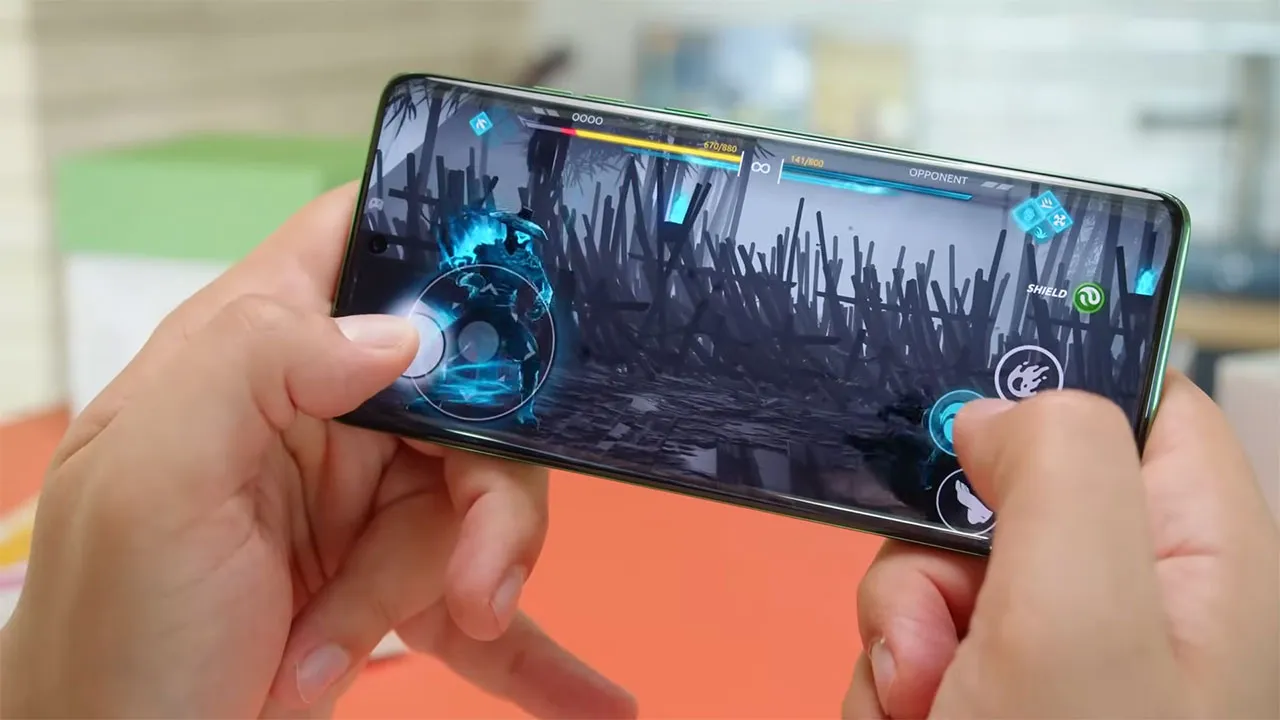
Motorola has left no stone unturned in the display department. A 6.67-inch P-OLED panel with a resolution of 1.5K, which is higher than the usual FHD + resolution in this category and displays images sharper. The 120 Hz refresh rate also makes everything from browsing Instagram to playing games run smoothly and smoothly.
But the real star of this display is its dazzling brightness. The maximum brightness of this panel reaches 4500 nits. Of course, you should know that this is the peak or maximum brightness and is only activated for small parts of the screen when playing HDR content. But this number shows the high capability of this display. This feature is a huge advantage for our always sunny country; it means that you can comfortably work with the phone, read your messages and watch videos under the midday sun, without straining your eyes. This is a big leap compared to the 2000 nit brightness of the Edge 50 Pro and even higher than many flagships on the market.
This high-quality display is Motorola’s main strategy to differentiate the Edge 60 in the market. Motorola knows that it can’t compete with Poco in terms of pure processing power, and it can’t compete with Samsung in terms of software support and brand loyalty. So, it’s invested in a point where it can have a decisive and undeniable advantage: the display. This incredibly bright and high-quality display is not just a technical feature, but a hook to attract users who prioritize video content consumption and prioritize screen quality over everything else. This display is also covered with a protective layer of Gorilla Glass 7i, which is well resistant to scratches and impacts.
Motorola Edge 60 Battery Review
Motorola has included a massive 5200 mAh battery in the Edge 60. This battery, along with the low-power MediaTek processor, shows very good charging performance. According to tests, this phone can last 13 hours and 32 minutes in mixed use. Simply put, with normal to heavy use, this phone can easily last a full day and still have 20-30% charge at the end of the night. This is one of the main strengths of the Edge 60.
A 68W fast charger is also included to charge this large battery. This charger can charge the phone to 48% in 15 minutes and 81% in 30 minutes, which is a very good and competitive speed.
But there are two negative points. First, Motorola has removed wireless charging from this phone. This is while the previous generation, the Edge 50, supported 15W wireless charging. This is a step back to remove a luxury and practical feature, which was probably done to reduce costs and differentiate it from the Pro models.
Motorola Edge 60 Camera Review
| Camera Component | Pros | Cons |
|---|---|---|
| Main Camera | Excellent daylight photos; Good detail & colors; OIS. | Inconsistent performance; Noisy photos at times. |
| Wide-Angle/Macro | 50MP sensor; Autofocus for high-quality macro shots. | – |
| 3x Optical Zoom | Major differentiator; OIS; Great for portraits. | Not flagship quality; Soft & noisy in low light. |
| Selfie Camera | 50MP sensor; Sharp and detailed selfies. | – |
| Video Recording | – | Max 4K/30fps; Poor stabilization; Struggles in challenging light. |
Motorola has considered a very attractive and practical triple camera combination for the Edge 60, which on paper is one of the best in this price range. The main lens uses the popular Sony Lytia 700C sensor and is also equipped with optical image stabilization (OIS). This camera has the potential to capture excellent photos in daylight; photos with good details and natural colors. But the important thing to note is the inconsistent performance of this camera. What does that mean? Sometimes the photos are great, but sometimes it seems like the phone is not in the mood and the photos are noisy and lifeless. This instability could be due to software processing, and we hope Motorola fixes this issue with future updates.
Here we see a big upgrade over previous generations. A 50-megapixel sensor with a 122-degree wide-angle lens that’s great for landscape and architectural photography. More importantly, this lens is equipped with autofocus, which allows it to take high-quality macro shots as well. So no more poor-quality 2-megapixel macro lenses.
This lens is the star of the Edge 60’s camera suite and its main differentiator from most of its competitors. Having a true 3x optical zoom with optical image stabilization (OIS) is a huge boon in this price range. With this lens, you can get close to your subjects without losing quality and take much better portrait photos. Of course, the quality of this lens is not as good as flagships, and in low light or indoor environments, photos are a bit soft and noisy.
The 50-megapixel selfie camera is also a significant upgrade that promises to capture sharp and detailed selfies.
Unfortunately, if you’re a vlogger or if video quality is very important to you, this phone is likely to disappoint you. All cameras, including the main lens, can only shoot 4K video at 30 frames per second. The lack of a 60 fps option in 2025 is a big drawback. The digital image stabilization also doesn’t work very well, and videos are shaky. In addition, the phone does poorly in managing light and shadows in challenging lighting conditions and low light.
Motorola Edge 60 Hardware Performance Review
Motorola has gone for a MediaTek chip for the beating heart of the Edge 60; Dimensity 7300 (or 7400 in the Indian version) is built on a 4nm architecture. The benchmark scores of this chip, such as around 660k on AnTuTu and around 3000 on GeekBench, show that we are dealing with a capable mid-range. In layman’s terms, this processor is perfect for everyday tasks, web browsing, running multiple apps simultaneously, and even semi-heavy games, and you won’t experience any lag or slowdown. But if you’re looking for a gaming monster that can run Call of Duty on the highest graphics settings and with a stable frame rate, you’d be better off going for options like the Poco X7 Pro, which have more powerful processors. In terms of raw processing power, this chip is a step below the Snapdragon 7 3rd generation in the Edge 50 Pro (with an AnTuTu score of around 840k).
But the real story behind this phone’s performance isn’t its processor. There are two hidden heroes here that transform the user experience: internal storage and a memory card slot. The Edge 60 is equipped with super-fast UFS 4.0 internal storage. This technology is usually used in flagship phones and significantly increases the speed of reading and writing data. The result? Apps and games open faster, files copy faster, and overall, the phone feels much faster. This is a huge upgrade over the UFS 2.2 memory in the Edge 50 Pro and Edge 60 Fusion.
The second hero is the return of the microSDXC memory card slot. In an era when most companies are removing this useful feature, Motorola has brought it back. This means you no longer have to worry about filling up your phone’s memory with photos and videos, and you can increase the storage space for a small fee. Rather than focusing on raw processing power, which is only important to hardcore gamers, Motorola has invested in factors that increase perceived speed for the average user. For most people, the speedy app loading (thanks to UFS 4.0) and the lack of memory concerns (thanks to microSD) will have a greater impact on a smooth and enjoyable everyday experience than a few higher frames in a heavy game.
Motorola Edge 60 Software Review
The Edge 60 comes with Android 15 and Motorola’s Hello UI. One of the biggest reasons Motorola phones are so popular is the software experience that’s close to stock Android. There are no unnecessary extra apps or cluttered UI. Everything is simple, smooth, and straightforward.
Of course, Motorola has added its own twists to this stock Android. Cool features like Moto Gestures (for example, shaking the phone twice to turn on the flashlight or turning on the camera with a twist of the wrist) and Smart Connect (formerly Ready For) for connecting to a computer or TV for a desktop experience are still there and very useful.
Like other companies, Motorola has also gotten into the artificial intelligence game and added Moto AI features to this phone. This AI can summarize your notifications, transcribe and summarize the content on the screen, and do other things like that. Of course, these features are still in their infancy and may not be as mature as other competitors.
However, there are also criticisms of Hello UI. There are too many pre-installed apps and the user interface sometimes has strange flaws; for example, there is no dedicated gallery app and you have to use Google Photos, or accessing the settings menu is a bit cumbersome.
As for updates, Motorola has promised 3 years of OS updates and 4 years of security updates for this phone. This is a good commitment, but when we compare it to Samsung’s promise of 6 years of support for a phone like the Galaxy A56, it pales a bit, and this is an important long-term advantage for Samsung.
Motorola Edge 60 Speaker Review
The Edge 60 is equipped with a set of stereo speakers that also support Dolby Atmos technology. One of the speakers is located at the bottom of the phone, and the earpiece also acts as a secondary speaker.
In loudness tests, these speakers score highly. This means you can hear the ringtone and notifications easily, even in crowded environments. But when it comes to sound quality, things are different. The sound quality of these speakers is average at best. High-frequency sounds (small sounds) are reproduced very well, but this comes at the cost of weak vocals and a lack of bass. As a result, for watching movies or listening to music, these speakers may not provide the volume and warmth you expect.
Is the Motorola Edge 60 worth buying?
Well, we’ve come to the end of our Motorola Edge 60 review. Is the Motorola Edge 60 a good phone? Absolutely. Is it worth buying? This is where it gets tricky. This phone has a combination of very bright strengths and some notable weaknesses.
Edge 60 Strengths:
- An incredibly bright, sharp, and fluid display that is unmatched in this category.
- A very durable body with IP68/IP69 and military-grade certifications.
- An efficient camera suite with a telephoto lens with 3x optical zoom.
- Ultra-fast UFS 4.0 internal memory that feels like a flagship.
- Memory card support for expanding storage.
- Excellent battery life and fast wired charging speed.
Edge 60 Weaknesses:
- The processor performs mediocre compared to gaming-oriented competitors.
- The main camera software is not stable.
- Video quality, especially stabilization and the lack of 60 frames, is disappointing.
- Wireless charging is removed.
- The sound quality of the speakers is not up to par with their loudness.
To help you decide, let’s put the Edge 60 next to its main competitors:
The Motorola Edge 60 isn’t trying to be the fastest or cheapest phone on the market. It’s designed for a specific user.
Who should buy the Edge 60?
If you’re looking for a good-looking, rugged phone with a great screen for watching movies, want a real zoom camera for taking photos, and value storage speed over raw processor power, the Edge 60 could be a great choice. It’s a well-balanced, all-rounder that delivers a flagship-level experience in a few key areas.
Who shouldn’t buy the Edge 60?
But if you’re a serious gamer (you’d be better off with the Poco X7 Pro), or if video quality and long-term software updates are your top priorities (the Samsung A56 is a more reliable option), or even if optical zoom isn’t important to you and you want to spend less money (the Motorola Edge 60 Fusion is a smarter choice), there are better options on the market for you. Motorola has put together a very smart and balanced package with the Edge 60, but this balance comes at the cost of sacrificing a few things. It’s up to you to see if your priorities align with Motorola’s strategy. Thank you for sticking with us until the end of this review!
