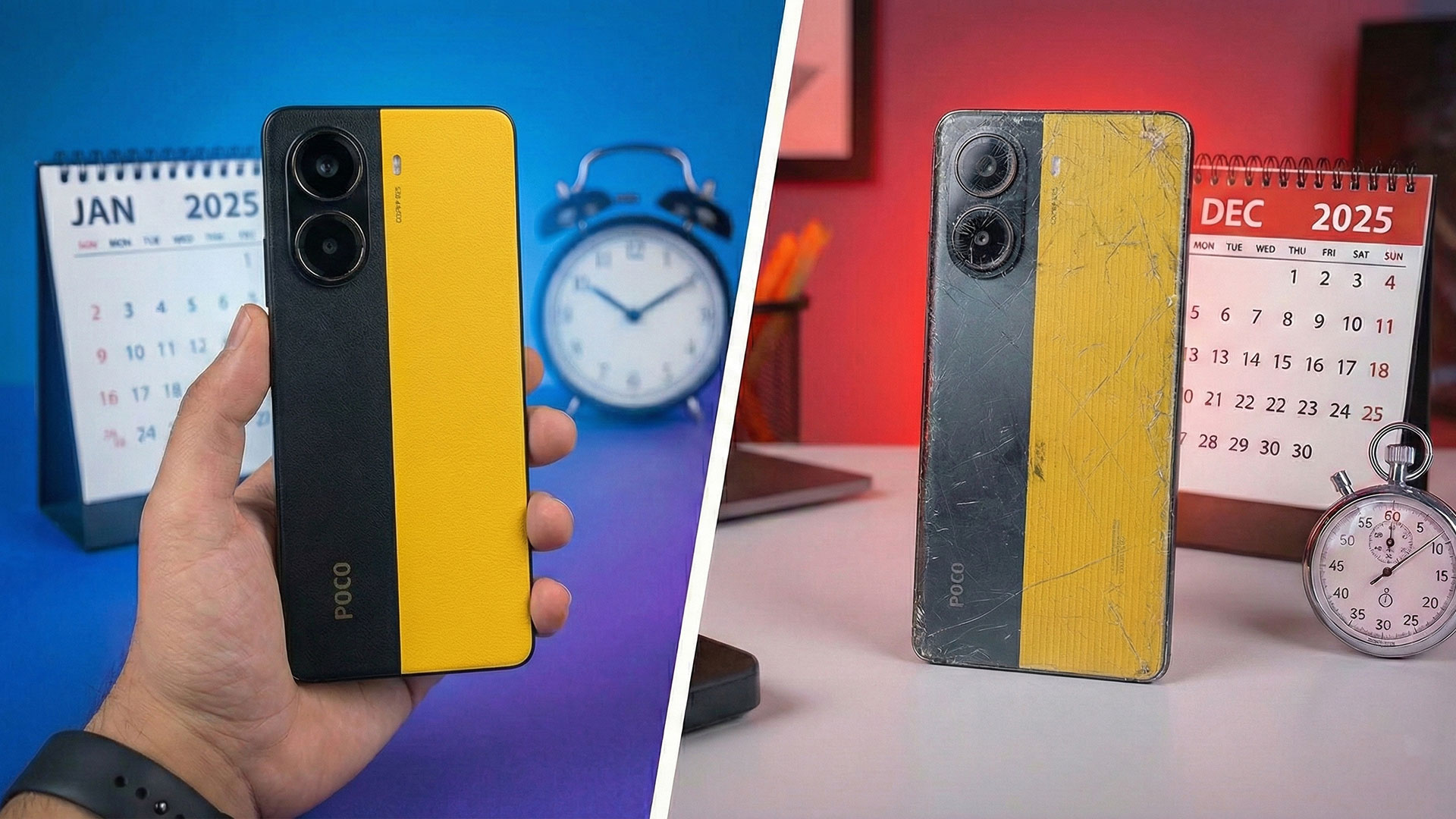
Today we are going to talk about the Poco X7 Pro. Poco releases a phone every year that on paper rivals the $1,000 flagships, but at a price that makes you want to buy it. But the real question is: are these awesome specs just for the first few days or will they still be as attractive after a few months of use?
We want to see how this phone has performed over the past 7-8 months. From heavy gaming to taking photos in low light and surfing social media. In this long-term review of the Xiaomi Poco X7 Pro, we want to give you a thorough, unbiased review of the phone. This is not a typical review; this is a complete dissection based on real-world experience and user reports so that you can decide for yourself whether this phone is still worth buying or not.
Xiaomi Poco X7 Pro Design Review in the Long Term
Poco X7 Pro – Long-Term Reality Check
Well, first of all, let’s look at the phone’s appearance and face. Poco has always tried to design the X series in a way that screams “I’m a gamer” or “I’m a nerd.” The X7 Pro is the same story, but it’s a little more mature. This phone comes in two main versions: one with a plastic body and one with Poco’s famous yellow color, which is made of synthetic leather (Eco-leather). When you take the phone out of the box on the first day, the leather version really feels premium and luxurious. It doesn’t slip at all and doesn’t leave fingerprints on it. It’s a pleasure to hold. The phone weighs about 195 to 198 grams, which is really well engineered and light for a phone with this gigantic battery. That is, when you hold it in your hand, it doesn’t feel like a brick and has a good weight balance.
But the long story is, this synthetic leather is good as long as you are gentle with it. Our reports and experiences after 8 months show that if you have a habit of putting your phone in your pocket next to keys, coins or any sharp object, the fate of that leather is called fate. It gets scratched and scratched very easily and that beautiful appearance turns into a scarred and damaged texture. So if you buy the leather version, you either have to be very careful or put it in a case like the others, because then what’s the point of leather? Another negative point that will make you feel bad in long-term use is the quality of the color of the frame around the cameras. Poco has come up with a big rectangular design for the cameras, which is its signature. A gold and silver chrome strip is used around these lenses. After about 8 months of use, especially if you put the phone on the table and pick it up a lot, this chrome color starts to fade and turn white. That means it loses its original shine and shine and gives the feeling of a cheap phone. My suggestion? Make sure to put a lens protector or a case with raised edges around the camera on it from day one to avoid this.
The waterproof and dustproof certifications are where we have to take our hats off to Poco. This phone is IP68/IP69 certified. Do you know what that means? Not only can you drop it in water (up to 1.5 meters), but even if you wash it with a jet wash (high-pressure water), nothing should happen to it (of course, don’t try it!). There have been users who took the phone in the bathroom, under the shower, or even while washing the dishes, the phone fell into a sink full of water and didn’t say a word.
In the mid-range market, where most phones are at least IP54 or IP67, this move by Poco is a big trump card. That is, if your job involves dealing with water and dirt or you are generally clumsy, this phone is the toughest one.
Gorilla Glass 7i is used on the screen. The name is very mouth-watering, but what does it do in practice? Many users thought that since it has Gorilla Glass 7, there was no need for a protective glass anymore and we peeled off that plastic fabric on the screen. The result? After a few months, the screen is full of small scratches and marks. This shows that the glass is still glass and sand and dust from your pocket can scratch it. So, I emphasize, make sure to use a proper glass right from the start and don’t fall for the Gorilla Glass ads.
Xiaomi Poco X7 Pro Display Long-Term Review
If I were to say that one of the main strengths of this phone that has maintained its quality even after the passage of time, it would be the display. Poco has used a 6.67-inch AMOLED panel with a resolution of 1.5K (1220 x 2712 pixels). This resolution is called CrystalRes. Why? Because it is much higher quality and sharper than Full HD, but its battery consumption is not as high as 4K or 2K panels. The pixel density of 446ppi means that you can see the pixels with the naked eye.
The brightness of this screen reaches 3200 nits in peak mode and rises to 1400 nits in HBM (high ambient light) mode. In our tests, the content is perfectly readable even under direct midday summer sunlight. You will have no problem seeing a map or reading messages on the street. The image contrast is also 5,000,000:1 and the black color has infinite depth. Watching HDR10+ and Dolby Vision movies on this phone is a real pleasure, and the colors are extremely vivid and dynamic.
The 120Hz display of this phone with high touch sampling is a gamer’s delight. Scrolling through menus, Instagram, and browsing the web is like butter. Of course, there is a small point; in some applications, it may suddenly drop to 60Hz due to software bugs (which I will explain in detail later), but most of the time you have that smooth feeling.
A technical feature that many may not pay attention to but is very important for eye health is PWM Dimming with a frequency of 1920Hz. What does this mean? It means that when you dim the screen (for example, in bed at night), the screen does not flicker and your eyes do not get tired and you do not get a headache. If you have sensitive eyes, this feature of the X7 Pro is a great blessing.
Of course, according to the Wise Selecting team’s own experience, sometimes the light detection sensor malfunctions, which can be fixed by turning Auto Brightness off and on.
Xiaomi Poco X7 Pro Long-Term Battery Performance Review
Poco proudly claims that it has a 6,550mAh battery. We all said, “Wow! This will last for 3 days.” But the reality is that long-term use is a different story. Unfortunately, the power consumption of this powerful chipset and that bright 1.5K display is very high. In addition, there are many reports of HyperOS software bugs that drain the battery in the background.
In heavy mixed use (including gaming, 5G data, web browsing, and high brightness), the screen-on-time (SOT) you get is about 6 to 7 hours. You might say that 6 hours is not bad! True, it’s not bad, but it’s not enough for a 6,550mAh battery! We expected at least 8 to 9 hours of screen-on time. Users have reported that even in standby mode (night to morning), the battery sometimes drops by 10 to 15 percent, which indicates that the software optimization is not done well. Especially if the VPN is always on, the battery consumption will increase.
Of course, there are some solutions, such as lowering the screen resolution or closing background applications, but you don’t buy a flagship killer phone that is always in Power Saving mode!
The good news is that if your battery runs out quickly, it will also charge very quickly. There is a 90-watt charger in the box of the phone (Xiaomi is hot, they still include a charger!).
- 0 to 50 percent: about 15 minutes.
- 0 to 100 percent: about 45 minutes to an hour and you’re done (depending on the ambient temperature). This charging speed is really life-saving. By the time you wake up in the morning, take a shower and eat breakfast, the phone is full.
Xiaomi Poco X7 Pro Camera Review in the Long Term
Poco has never claimed to make a camera phone, but at this price point we expect a decent camera. The 50MP main camera with optical image stabilization (OIS) performs reasonably well. Photos have good detail during the day, colors are vibrant, and the dynamic range (HDR) is decent.
In recent months, software updates have not changed the quality of photos, meaning the image processing is the same. But the camera interface has improved; for example, an iPhone-like zoom slider has been added, which is easy to use.
Another positive point is the improvement of the portrait mode. You can now have 1.3x zoom and the bokeh (background blur) is much more natural and looks like a professional camera. The 8MP ultra-wide sensor is just okay. There is little detail, a lot of noise, and the colors are different from the main camera. Don’t count on it at night. This is a common story in Xiaomi’s mid-range phones.
And the biggest disappointment is the selfie camera. Forget the 20-megapixel number, sir. The quality of selfies is not at all satisfactory. The photos are soft, facial details are lost, and it seems like an artificial beauty filter is always on. One user said that the selfie of this phone is even worse than the 2-megapixel camera of his phone 5 years ago! In portrait selfie mode, the edge detection sometimes makes mistakes. If you are a blogger or post a lot of selfie stories, this phone will disappoint you.
There is 4K video recording at 60 frames, which has good stabilization thanks to OIS. The quality of videos is good for Instagram and YouTube, and it has a relatively fast focus.
Poco X7 Pro Long-Term Hardware Review
Now we come to the interesting part. Where Poco has always claimed: pure power! The beating heart of this phone is the MediaTek Dimensity 8400 Ultra chip. This chip is made with TSMC’s 4nm architecture, which is the best chipset production line in the world. MediaTek has used the new Cortex-A725 cores in this chipset. It has one very powerful 3.25 GHz core, three 3.0 GHz cores, and four low-power cores. Combining these with the Mali-G720 MC7 GPU, it has recorded a terrible score of 1,704,330 in the Antutu benchmark.
To understand how big this number is, I must say that its direct competitor, the Samsung A56 with the Exynos 1580 chipset, has a much lower score. In fact, the graphics power of this phone rivals the Snapdragon 8 Gen 2, which was last year’s flagship. That means you get the power of a flagship for the money of a mid-range phone.
We tested this phone in various games and got some interesting results:
- Call of Duty Mobile: Here the X7 Pro reigns supreme. The game runs very smoothly and smoothly, and according to tests, it supports 120 frames per second. That is, if you set the screen to 120 Hz and match the game settings, you have an incredibly smooth and fast gameplay that gives you a nice advantage in multiplayer. No lag or slowdown was seen, and the touch is also very accurate.
- PUBG Mobile: Here we have a little story. Although the phone’s hardware is capable of running 90 or even 120 frames, in some versions (like BGMI India) or some updates, the frame rate is locked at 60. This problem is mostly on the side of the game developers who have not yet fully optimized this new chipset or have financial contracts behind the scenes! But in the global version of PUBG, we also had reports of running 90 frames. The important thing is that the hardware is powerful, but the game software sometimes lags.
- Genshin Impact: The heaviest mobile game! The phone can run this game with high graphics, but the high temperature of the phone does not allow its performance to be good in the long run.
The biggest Achilles heel of the Poco X7 Pro in the long run that can bother many is the heat issue. See, when you put a Ferrari engine on the Pride body, it gets hot somewhere! This Dimensity 8400 Ultra chipset is really powerful, but the phone’s cooling system cannot keep its temperature down under long-term stress. In our tests and user reports, after about 40 minutes of heavy gaming (like Genshin or Calaf with max graphics), the phone’s temperature reaches 44-45 degrees Celsius.
- Does the phone turn off? No.
- Does it give an error? Usually not.
- Does it burn your hand? Not burning, but it gets really hot! Especially since the frame of the device is plastic, it transfers heat in a way that feels unpleasant. In addition to gaming, even when using the camera outdoors or taking benchmark rankings, the phone gets extremely hot. This heat causes the system to limit performance (Thermal Throttling) after a while to avoid damage and reduce screen brightness or the game frame rate to suddenly drop. So if you are a hardcore gamer, you should definitely have a cooling fan (Cooler) next to it.
This phone comes with UFS 4.0 memory and LPDDR5X RAM. These are the latest technologies available. The speed of opening programs, installing games, and copying files is incredibly fast. Even after 6 months when the phone’s memory is full, its speed has not noticeably decreased and is still as fast as the first day. Multitasking is also great and you can keep a whole app open without closing it (if HyperOS RAM management allows it!).
Poco X7 Pro UI Review in the Long Term
This phone comes with Android 15 and HyperOS 2.0. Xiaomi’s new UI is much lighter and smoother than MIUI, and its animations are prettier. The lock screen customization features are also great. Unfortunately, Xiaomi is like a bee without honey without bugs. In long-term use, bugs have been seen:
B Lock screen freezing: Some users said that in the morning when they want to check notifications, the phone freezes on the lock screen and has to be restarted.
N RAM management: Even though you have 12 GB of RAM, sometimes the system acts too aggressively and closes background apps.
- Ads and Bloatware: There are still a lot of pre-installed apps that you have to spend half an hour to uninstall.
The proximity sensor is always a hot topic on Xiaomi phones. The Poco X7 Pro uses an ultrasonic sensor, not the old physical infrared sensor or a mere virtual sensor. Its performance is much better than previous generations (like the Poco F3), but it is still not 100% accurate. Sometimes during WhatsApp calls or when you tilt the phone, the screen may light up and your face may hit the end call button.
Poco promises 3 years of Android updates and 4 years of security updates. This is good, but it does not reach the level of Samsung (6 years of Android, 7 years of security). Given Poco’s history, updates may be delayed for different regions.
Long-term speaker performance of the Poco X7 Pro
The stereo speakers on this phone are really great. The sound is loud, high-quality, and has bass. Even when you turn the volume all the way up, it doesn’t crackle. It’s perfect for gaming and watching movies without headphones.
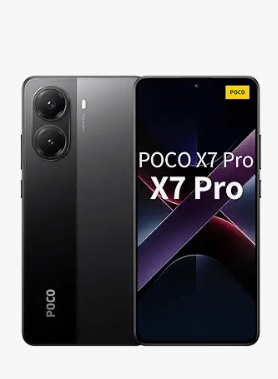
Is the Poco X7 Pro still worth buying?
Well, friends, we’ve come to the bottom of the line. After 6 months, the Poco X7 Pro has shown itself to be a bipolar phone. On the one hand, its hardware is so powerful that you feel like you have a flagship, on the other hand, problems like overheating and software bugs remind you why the Poco X7 Pro is much cheaper than a flagship.
If you are a gamer and your budget does not reach flagships, this phone is the best option on the market. Just do 3 things:
- Buy a cooling fan.
- Buy a case that covers the camera.
- Put a good glass on it.
With these things, the Poco X7 Pro is a lovely monster that will serve you comfortably for 3-4 years. But if your usage is normal, you take a lot of photos, and you don’t mind the phone getting hot and having software bugs, go for the Samsung A56, which has fewer problems. Thank you for being with us so far. If you have any questions or experience using this phone, be sure to write in the comments so that others can use it too.
Xiaomi Poco X6 Pro long-term review
Xiaomi Poco M7 4G review
Xiaomi Poco F5 review