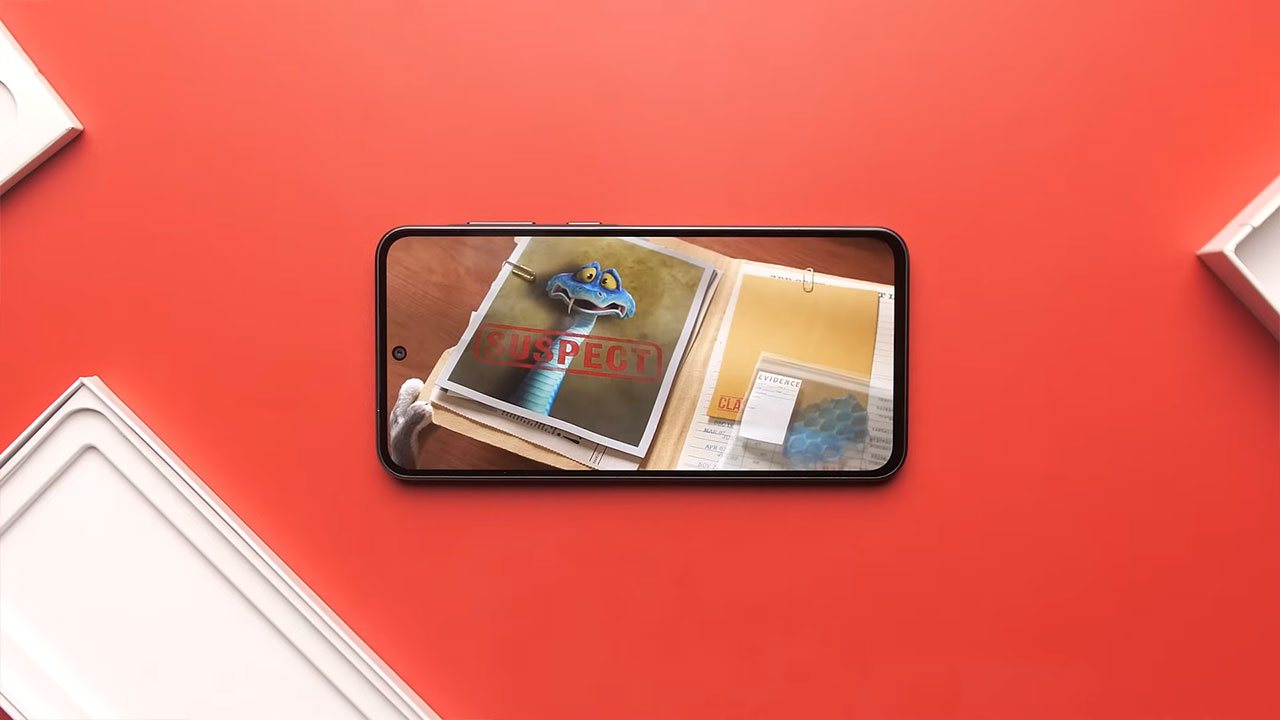
The Samsung A36 was launched with a lot of fanfare (March 2025). Samsung had put a Snapdragon processor in this generation, had included a 45W charger, and most interestingly, had promised 6 years of software updates. That is, a phone that will be with you for many years to come.
Now that a few months have passed since the launch of the A36, the phone has received several updates and recently the important One UI 8 (Android 16) update has also arrived. The price of the A36 is also in the market range of $ 260. The main question is: has the A36 improved or deteriorated in these few months of real use? What happened to those promises and promises of Samsung in practice? Has this phone lived up to its reputation in the long term or has it had its problems? In this long-term review, we want to see head-to-head what happened to the A36 in different parts. So stay tuned with WiseSelecting with the long-term review of the Samsung A36.
Long-term review of the Samsung A36 design
In our review of the A36, we said that the first day we held the A36, we felt good. Samsung had made this phone thinner (7.4 mm) and lighter (195 grams) than its predecessor (A35). The main strength that was very well maneuvered was the use of Gorilla Glass Victus Plus for both the front and back panels. These specifications are usually for flagship phones and give the impression of an expensive phone. Having an IP67 certificate (water and dust resistance) also made it easier to believe that we were dealing with a well-made and tough phone.
So, how are things after a few months? I must say that the glass has done its job well. That Victus Plus protector has done its job well. In this regard, its performance has not dropped at all, it has proven that it is made of good material.
Here we have a big but. That first-day luxury feeling is slowly fading. Why? Because of the plastic frame. Samsung has used an aluminum frame in its more expensive phones like the A55 and A56, but it has made the A36 less durable. This plastic frame, especially if you use it without a bezel, will absorb scratches and scuffs much faster than glass over time.
Samsung has done something interesting: where you see the phone (back and front), it uses the best glass, but where you touch the phone every day (the frame), it is plastic. This plastic frame, in the long run, reminds you that your phone is a mid-range phone. Overall, the design has not lost any performance, IP67 is in place, but that plastic frame makes the phone feel as premium as its more expensive competitors over time.
Long-term review of the display Samsung A36 design
💎 Exceptional Display Quality
A 6.7-inch Super AMOLED panel with a smooth 120Hz refresh rate. Brightness reaches **1200 nits (HBM)** and **1900 nits (Peak)** — outstanding for a mid‑range phone.
🔆 Long‑Term Performance
The display remains excellent over time. Colors stay vivid, blacks stay deep, and outdoor visibility at 1900 nits continues to perform flawlessly.
📏 Bezels
Despite Samsung claiming reduced bezels, the bottom bezel is still thicker than many competitors. It’s subtle in daily use but noticeable next to newer models.
🐛 Early Software Issues
Initial One UI 7 builds had awkward AOD and Navigation Bar layouts. Fortunately, updates — especially One UI 8 — fixed most issues, improving the overall display experience.
Samsung did not skimp on the display for the A36. A giant 6.7-inch Super AMOLED panel with a 120Hz refresh rate. These specs were great on paper. But most importantly, it had incredible brightness: 1200 nits (HBM) and up to 1900 nits (Peak). That’s really great for a mid-range phone (the A35 had 1000 nits in comparison), and Samsung promised that we wouldn’t have any problems in direct sunlight.
Now, how’s the long-term performance of the display? In a word: excellent. The panel’s performance hasn’t dropped in the past few months. It’s still one of the best displays you can find in this price range. The colors are vivid, the blacks are deep, and that 1900 nits of brightness really works outdoors and in direct sunlight.
But there were two things that stood out more in the long run:
- Bezels: Although Samsung said on paper that the bezels had been reduced, in practice, especially the bottom bezel, it is still a bit thicker than Chinese competitors or even cheaper phones. This may not be noticeable in everyday use, but when you put the phone next to a newer model, it will impress you.
- Software bugs: In the early versions of the software (One UI 7), there were a number of small bugs on the display. For example, the layout of the always-on display (AOD) and the navigation bar (Nav Bar) was kind of awkward and awkward and not quite in their place.
The good news is that those software bugs were largely fixed in subsequent updates, especially the big One UI 8 update. So, not only did we not have any drops in the display section, but thanks to the software updates, the user experience has also improved a little.
Samsung A36 Design Performance Review in the Long Term
On paper, the A36 battery was standard and good, but in phone reviews we don’t just stick to specifications and we check in practice. A 5000 mAh battery is what most phones have these days. But Samsung’s big claim was to upgrade the charging speed from 25 watts (in the A35) to 45 watts. This meant we should have had a faster charging speed and less waiting. Of course, as usual, the charger was not included in the box and you had to buy it separately.
First, let me tell you about the battery itself. In the charging department, the 5000 mAh battery has done a good job. In our combined and daily use, the phone easily lasted a full day and even gave us up to 7 hours of screen-on-time (SOT). We haven’t seen any noticeable or severe drops in charging performance in the past few months. In this sense, the battery is good and has not dropped.
But that 45 watt claim, this is where the long-term story becomes scary.
- Heat: The A36 gets noticeably hot when charging, whether with a 25W or 45W charger. This heat is not just a bad feeling, this heat is the number one battery killer in the long run and greatly reduces its useful life.
- Uselessness of 45W: Well, that 45W is not that much of a mouthful at all. Tests have shown that the difference between a 25W and a 45W charger in a full charge (zero to hundred), is only about 10 to 12 minutes!
- Cable scam: The most interesting thing is that the cable that Samsung included in the phone box (to be fair, it included the same cable), does not support 45W at all! That cable ultimately passes 25W. For a real 45W, you have to buy an expensive 5A cable separately.
The charging performance of the A36 is good and has not dropped significantly. But that 45W charging feature is a marketing gimmick. It’s not only less than 25W, it requires a special cable, and worst of all, it heats up the phone. Samsung sold a phone that’s supposed to last 6 years, but it’s built a charging system that’s going to damage the battery in the long run. So not only has this area not improved, but that overheating is a serious long-term threat.
Samsung A36 Camera Long-Term Performance Review
1. Camera Specifications
• 50MP main (wide) lens
• 8MP ultrawide lens
• 5MP macro lens
• 12MP selfie camera
• Both main & selfie: 4K at 30fps
2. Photography Performance
High-quality, sharp, and detailed images with vibrant colors.
Software updates improved image processing and reduced noise in low light.
3. Video Performance
Main and selfie cameras deliver strong 4K videos.
But there is a major limitation deliberately imposed by Samsung.
4. Critical Issue: Ultrawide Video Disabled
The 8MP ultrawide lens cannot record video at all.
This is a **software restriction**, not a hardware issue.
Samsung disables ultrawide video on mid-range phones to differentiate from higher-end models.
5. Long-term Impact
Indoor or landscape video recording becomes limited and frustrating.
The phone performs below its real hardware capabilities due to intentional software locking.
The A36 camera suite was good on paper. A triple camera setup included: a 50MP main lens (wide), 8MP ultrawide, and 5MP macro. The selfie camera has also been upgraded to 12MP. On the plus side, both the main and selfie cameras can shoot 4K at 30fps, which is great for a mid-range phone.
In the photography department, the A36 is still great. The 50MP main lens takes high-quality, sharp, and detailed photos. Image processing is good thanks to the Snapdragon processor and the colors are vibrant. With the software updates that have come in the last few months, the image processing has gotten a little better and noise in low light is better controlled. So in photography, its performance has been stable and even a little better.
But in the video section, there is a catastrophic problem. A problem that you may not notice on the first day, but in long-term use it will definitely get on your nerves. You can’t shoot videos with the ultra-wide lens!
Yes, you read that right. This phone has an 8-megapixel ultra-wide lens that you can only shoot photos with. When you enter video mode, Samsung doesn’t let you switch to the ultra-wide lens. This is not a bug, it is a deliberate software limitation that Samsung puts in many of its mid-range phones to maintain their difference from higher-end models. The Snapdragon 630 processor can easily handle 1080p video with this lens, but Samsung has intentionally locked this feature. In the long run, this means that whenever you try to shoot video indoors or from a large landscape, the A36 will lag. This is a major drawback and shows that the phone’s performance has been intentionally reduced beyond what its hardware allows.
Samsung A36 Hardware Review in the Long Term
The biggest news about the A36 was the use of the Snapdragon 6 Gen 3 processor (4nm). Finally, Samsung moved away from Exynos in this Samsung phone series after a long time and we were all happy. The Adreno 710 GPU also promised good gaming performance. Samsung even included a larger Vapor Chamber (15% larger), which means the phone shouldn’t heat up while gaming. The base RAM was also upgraded from 4GB to 6GB, which was good news.
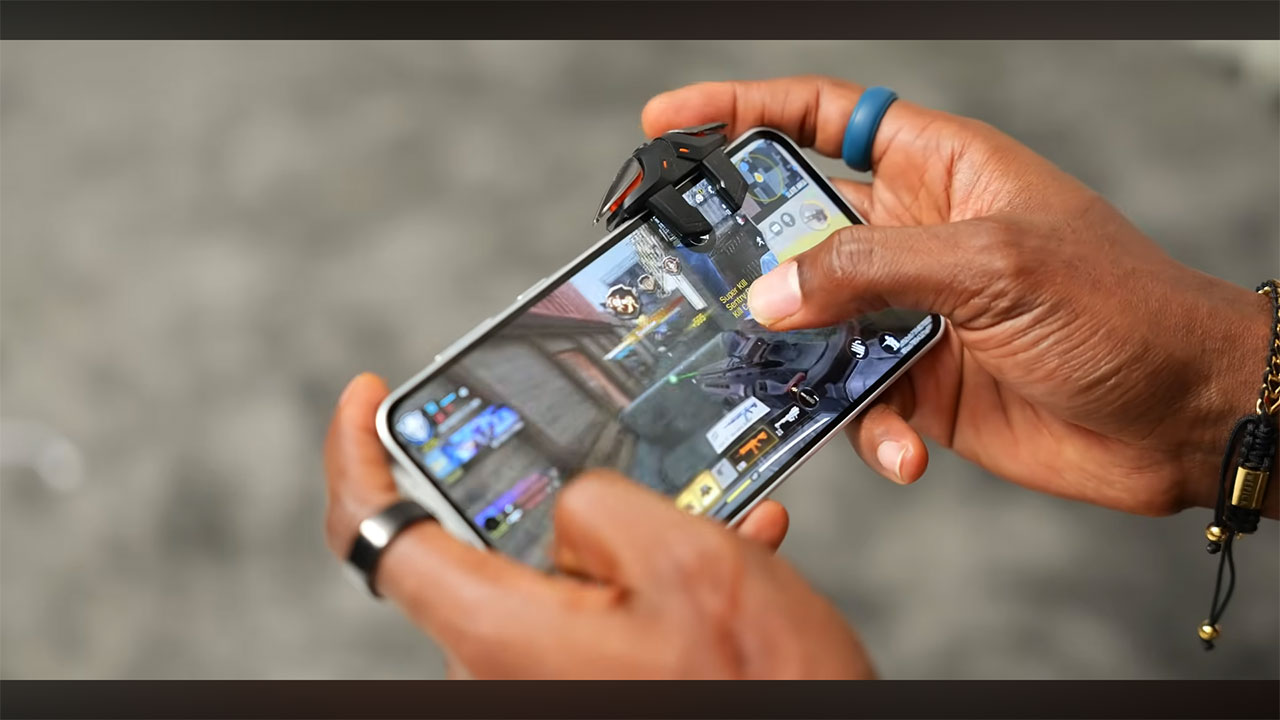
In the past few months, the Snapdragon 6 Gen 3 has lived up to its name. The phone is smooth in everyday tasks (of course, if we factor in those software lags that we get to). In the gaming department, it runs games like Call of Duty Mobile on High and Very High settings without noticeable frame drops or lag. That cooling system also does its job well and the phone doesn’t heat up while gaming (quite the opposite when charging!). So in the processing and gaming department, the A36 not only hasn’t dropped, but it’s still strong and smooth.
But Samsung has made another bad move that could be quite annoying in the long run: removing the MicroSD memory card slot. Samsung is giving you a phone with a promise of 6 years of updates (meaning keep the phone for 6 years), but it has given it a base memory of 128 GB and has closed the way to upgrade it! In just a few months of use, with 50 megapixel photos and 4K videos, the phone’s memory fills up quickly. So if you want to use the phone for a long time and not have to deal with the problem of lack of memory, it’s better to go for the version with 256 GB of memory.
Samsung A36 software review in the long term
Let’s get to the software section. The A36 came with Android 15 and One UI 7. But Samsung’s golden promise was: 6 generations of Android operating system upgrades and 6 years of security updates. This means that this phone, which came with Android 15, should get Android 21! This is unique in the Android world and a great strength.
In this department, Samsung has kept its promise. In the past few months, the phone has received timely security updates and just a while ago, the One UI 8 (Android 16) stable update was released for it. This update also brought a number of new artificial intelligence (AI) features and visual improvements. So in terms of support, the A36 is great and has definitely improved.
But that perennial problem of the Samsung A series is still visible here, occasional lags. We thought that with the arrival of Snapdragon, this problem would be solved, but it hasn’t. In long-term use, the phone still has those tiny but noticeable lags. Especially when the phone has been idle for a while or you want to quickly switch between apps, you see those small pauses.
Even after the One UI 8 update, reports say that the speed performance is almost the same and those lags have not completely disappeared. It seems like Samsung is intentionally keeping these lags in the A series to tempt you to buy the S series.
Long-term review of the Samsung A36 speaker
In the speaker section, the A36 came with stereo speakers that played sound simultaneously from the bottom speaker and the conversation speaker. The 3.5mm headphone jack was also removed.
The A36’s stereo speakers still have acceptable quality after all this time. The sound is loud and has good resolution. Even at the lowest volumes, the sound is not too sharp and annoying. In the past few months, the speakers have neither become noisy nor have they lost quality. Their performance is completely standard and works. There has been no improvement or decline in this department, it is still as good as the first day.
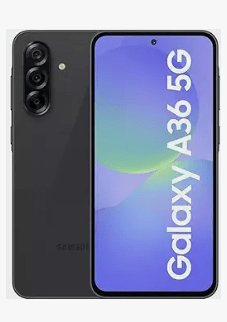
Is the A36 still worth buying?
Well, we’ve come to the bottom. The A36 is currently (mid-2025) on the market for around 30 to 32 million tomans. After living with this phone for a few months, what do we think?
Strengths that are still strong:
1. Screen: A 6.7-inch Super AMOLED panel that is unbeatable at this price.
2. Build quality (glass): Using Gorilla Glass Victus Plus on the back and front feels good and is durable in the long run.
3. Processor: Snapdragon 6 Gen 3 does not slow down or heat up in games and heavy tasks.
4. Software support: Those 6 years of software updates are a great encouragement that you won’t find anywhere else.
Weaknesses that will ruin you in the long run:
1. Removing the memory card: This move is a ridiculous contradiction next to those 6 years of updates. If you buy it, just buy the 256GB version, otherwise you will regret it.
2. 45W charging: It’s a marketing gimmick that only heats up the phone and damages the battery in the long run.
3. Camera lock: Not being able to shoot videos with the ultrawide lens is an annoying software limitation that is more noticeable in the long run.
4. Software lag: Those 6 years of updates come with the occasional lag that even Snapdragon hasn’t fixed.
Look, the A36 is a phone full of contradictions. Samsung has made a phone with great hardware (display and processor), but has ruined your experience with software (lag, camera lock) and hardware (SD card removal, hot charging) decisions.
This phone isn’t old, but it has a few chronic issues that have been with it since day one, and in this long-term review, these issues were more apparent. If you can live with these issues (especially memory and lag), it’s still a good option, given its 6-year-old display and software support. But if you want full clarity and want to shoot videos with the ultra-wide lens, you might be better off looking at its competitors or even the A56.