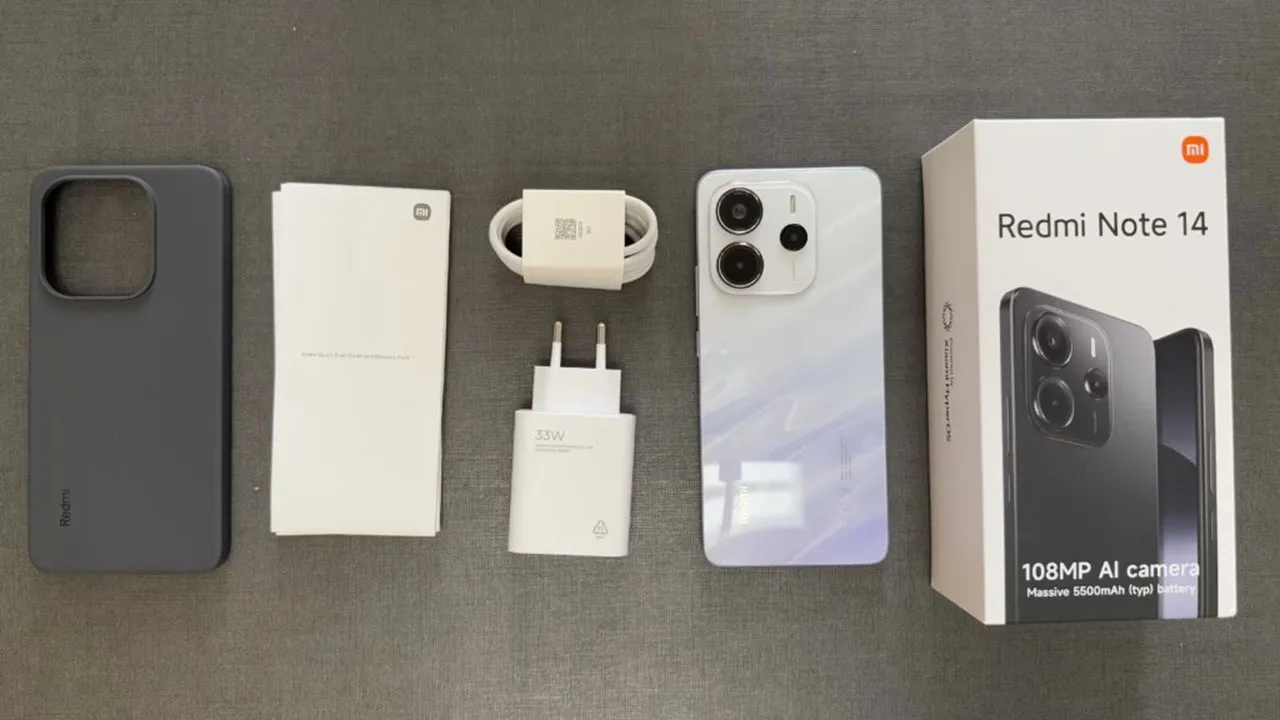
Remember when Xiaomi introduced the Redmi Note 14 4G in early 2025? There was a lot of buzz that a budget phone was coming that was going to sweep the market. Its specifications on paper were nothing to write home about; 120Hz AMOLED screen, 108MP camera, giant 5500mAh battery! We all said it was it! But hey, we at WiseSelecting don’t care about the specifications on the box and paper. Now that some time has passed since the phone was launched and the phone has taken a beating and received several software updates, it’s time to see if that budget champion is still a champion or has it fallen short in the long run? Has its performance improved or declined?
Long-term review of the design of the Xiaomi Redmi Note 14 4G phone
When we first held the Redmi Note 14 4G in our hands, we all said, “Wow, Xiaomi has made something!” The sleek, modern design with an aluminum frame, a matte plastic back that doesn’t leave fingerprints, and attractive colors like Lime Green and Ocean Blue made it feel like a more expensive phone. Xiaomi is truly a master at delivering a charming look at a low price.
But how has that original color and shine held up after a few months of use? The aluminum frame, which is made of a high-strength alloy, still has the same original hardness and is not easily scratched. The plastic back also maintains its clean appearance due to its matte finish. But the point is, that’s all for show. The front glass of the phone is Gorilla Glass 5. This means it is well resistant to cracking when dropped, but it is not as resistant to small scratches and hairlines that occur in a pocket next to keys and coins, and if you don’t use a screen protector, you will definitely see traces of them on the screen after a few months. This is where we realize that the initial premium feel was a bit of an illusion of premium. Xiaomi has cleverly created an expensive exterior, but on the inside, it has used more economical materials to keep the price down.
Of course, there is a hidden point. Xiaomi has not skimped on the internal durability of the phone. The use of shock-absorbing foam inside the body and the reinforcement of the four internal corners show that the company’s engineers were mindful of the long-term durability of the phone against impact. So, the exterior may get scratches and dents after a while, but it is less likely to fail after a single drop. It also had an IP54 certification from the beginning, meaning it is resistant to splashes and rain, and there have been no reports of any problems with this in the past few months, but remember that it is not completely waterproof. In terms of usability, with a weight of about 197 grams and a thickness of 8.2 mm, the phone is still comfortable and its flat edges make it sit firmly in the hand and not slip.(Poco X7 Pro gaming test)
Xiaomi Redmi Note 14 4G Display Long-Term Review
Let’s get to the main highlight of this phone, its display. A 6.67-inch AMOLED panel with FHD+ resolution and a 120Hz refresh rate that has a brightness of 1800 nits. The first day we turned it on, we said it couldn’t get any better at this price! The colors were vibrant, the black depth was excellent, and it was comfortable to use even in direct sunlight. It was even better than its direct competitor, the Samsung Galaxy A16.
So, how are things after a few months? Is that 120Hz brightness still there? To be honest, not always. As the memory fills up and heavy HyperOS updates are installed, that initial brightness has decreased a bit. Some users have reported that in everyday use, they sometimes encounter small lags and slowdowns, which shows that the Helio G99 processor can hardly cope with the 120Hz display. In fact, the display is like a Ferrari engine mounted on a Pride chassis! The panel is great, but the processor can’t always unleash its full potential.
In terms of color quality and brightness, fortunately, it hasn’t dropped significantly and is still one of the best in its class. There’s no sign of pixel burn-in either. But one thing that’s been on my mind since day one, and is becoming more and more apparent with newer phones, is the large bezels around the display, especially at the top and bottom. These bezels kind of scream that this is a budget phone. This is a clear strategy on Xiaomi’s part to create a clear visual difference between this model and the more expensive Pro models and tempt you to buy them. So these bezels are a permanent design flaw that won’t go away over time.(Buying Guide for the Best Neckband Headphones)
Redmi Note 14 4G Long-Term Battery Review
The 5,500mAh battery of this phone was one of the biggest improvements over the previous generation. At first, its performance was excellent. It easily lasted two days with normal use and even a full day with heavy use. The 33W charger that was included in the box, thankfully, took about 70-80 minutes to fully charge the phone.
But long-term experience tells a different story. First, there is a natural performance drop. 6-month reviews show that a phone that used to come home at the end of the night with 25% charge now needs a charger with 10-15% remaining. This is normal and happens to any battery. But the real problem lies elsewhere; the software!
The Achilles heel of this phone’s battery has been the HyperOS updates. A lot of users on various forums are complaining about the battery draining quickly and strangely after updates. This is a classic problem with Xiaomi phones. It seems like Xiaomi’s software team is in cahoots with the battery team! One update makes the battery great, the next update ruins it again. This means that your battery experience in the long run is a gamble on the quality of future updates. Of course, Xiaomi also made a big claim and said that the battery of this phone is designed in such a way that after 1600 charges (i.e. about 4 years) it still retains more than 80% of its initial capacity. This is a great promise for long-term durability and in a way a smart move to counter this fear of users about battery performance decline. It seems like Xiaomi is saying, don’t worry about updates, our battery hardware is working properly!
Xiaomi Redmi Note 14 4G Camera Long-Term Review
Let’s get to the most controversial part: the camera. In a strange move, Xiaomi removed the 8-megapixel ultrawide camera from the 13th generation and replaced it with a 108-megapixel main sensor alongside two 2-megapixel macro and depth sensors, which are practically decorative. This means you lose a useful feature (wide-angle photography) in order to have a large number (108 megapixels) on the box. How has the 108-megapixel camera performed in the long term? Exactly what it was on day one; average. In daylight, it takes photos with detail and vibrant colors, but problems such as limited dynamic range (burning out of bright parts of the image) and oversaturation of colors are still present. Some users even say that the quality is lower than on their older phones. Software updates have not been able to work miracles either, because the main problems are hardware. The lack of optical image stabilization (OIS) makes night photography a challenge, and the digital zoom is almost unusable in low light.
The 20-megapixel selfie camera is also an improvement on paper, but in practice its photos are lackluster and lacking in detail. Video recording is also limited to 1080p and there is no 4K, which is a big drawback for 2025. This phone is a classic example of the megapixel myth. Xiaomi has sacrificed a useful feature (ultrawide) for a touted number that doesn’t deliver great quality in practice. The software also can’t fill the gap in the hardware. So if you bought the phone hoping that updates would improve its camera, I have to say you were sorely mistaken.
Redmi Note 14 4G Long-Term Hardware Review
The beating heart of this phone is MediaTek’s Helio G99-Ultra chipset. This processor was a noticeable improvement over the previous generation Snapdragon 685, and the benchmarks confirmed this. For everyday tasks and light games like Call of Duty with medium graphics settings, it has acceptable performance and, most importantly, it does not heat up too much.
But in the long run, this processor, which has relatively old cores, is starting to run out of steam. User reports of slowness, lag, and freezing of the phone after a few months of use, especially after HyperOS updates, are many. So if you are very sensitive to the smoothness of the phone or are a heavy gamer, this phone may disappoint you in the long run.(Xiaomi Redmi K90 Pro Max review)
Long-term review of Redmi Note 14 4G software
And the software. The phone was launched with HyperOS based on Android 14 and has received several updates so far. Its big strength is Xiaomi’s unique promise of 4 years of major Android updates and 6 years of security updates. This is great for a budget phone, which means you can rest assured about the software for several years. But there is an update paradox here. The same updates that should be the phone’s strengths often turn into weaknesses due to their low quality and many bugs, causing battery and performance problems. This means that you press the update button with fear and trembling every time lest the phone get worse! This unstable software experience is the biggest risk of buying this phone.
Long-term review of Xiaomi Redmi Note 14 4G speaker
The Redmi Note 14 Forge has stereo speakers with Dolby Atmos support, which were very good quality from the start. They produce loud, clear, and well-defined sound that is great for watching movies and listening to music in this price range. Fortunately, after a few months of heavy use, there has been no loss of quality or extraneous noise. The only complaint is the lack of deep bass, which is quite normal for a budget phone. Overall, the speakers are one of the parts that have remained consistent and satisfactory.
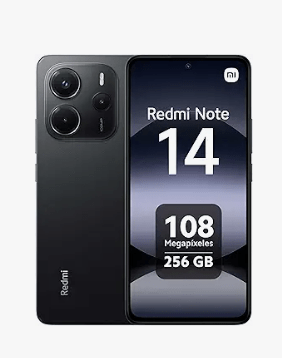
Is the Redmi Note 14 4G still worth buying?
Well, we have reached the end of the story. After a few months, the Redmi Note 14 4G is still a phone full of contradictions. It has put a great display and the promise of long updates next to a weak camera and a mediocre processor. Its performance has had a bumpy road during this time. Its processor has improved compared to the previous generation, but its battery has dropped due to software updates, and the initial clarity of the user interface has sometimes become laggy. The camera and design are the same as they were on day one; neither better nor worse. So who is this phone for?
If you’re looking for a phone with a great display for watching movies and browsing the web, battery life is important to you (assuming you can handle the risk of updates), and you plan to keep the phone for the next three to four years, the Redmi Note 14 Forty could be a smart choice given its promise of long-term updates. This phone is good for those who prioritize the display and software durability over the camera and gaming.
And who wouldn’t it be good for?
But if you’re a photography enthusiast and the lack of an ultrawide camera bothers you, or if you’re a heavy gamer and the slightest lag gets on your nerves, you’d be better off looking elsewhere. This phone is definitely not the first choice for photographers and gamers. If you have the Redmi Note 13 Forty, don’t even think about upgrading. You’ll be missing out on a useful ultrawide camera and getting a camera package that might be even weaker.